
Not every personal trainer certification carries the same weight, and with dozens competing for attention, the wrong choice costs money and career momentum. “Trusted” in this context has a concrete meaning: a credential that hiring managers at major gyms recognize and accept. The clearest marker of that is NCCA accreditation, the standard most major chains check for. Every certification here is NCCA-accredited; what separates them is track record, employer recognition, and how well each prepares you for the gym floor.
The short version: IPTA is a strong value pick backed by a genuine 4.7-star Trustpilot rating and NCCA accreditation, at $399. NASM has the broadest employer recognition and a decades-long track record. ACE brings nonprofit credibility and a large global base. NSCA is the research-backed standard in strength and conditioning. NCCPT is a budget-friendly accredited option with human coaching support. The right choice depends on where you want to work and what kind of trust signal matters most for that path.
How these certifications were compared
Every certification below is NCCA-accredited, so accreditation is the entry requirement rather than the tiebreaker. For a trust-focused comparison, the factors that matter are accreditation status (verified for each), employer recognition and track record, the transparency of pricing and terms, the strength of independent reviews where available, and the support a program provides. Figures come from each certifying body’s own materials and, for reviews, from public rating platforms; confirm current details before enrolling. This guide does not rank certifications by exam pass rate, since those figures aren’t consistently published and vary year to year.
Comparison at a glance
| Certification | Established | Trust signals | Entry price | NCCA-accredited |
| IPTA | Newer entrant | 4.7-star Trustpilot; pass guarantee | $399 (Rookie tier) | Yes |
| NASM | 1987 | Broad gym recognition; long track record | ~$899 (often discounted) | Yes |
| ACE | 1985 | Established nonprofit; large global base | Packages from ~$700; exam a $99 add-on | Yes |
| NSCA | 1978 | Research-based; standard in strength and conditioning | $300 exam (members) / $435 (non-members) | Yes |
| NCCPT | 1995 | Recognized at major U.S./Canadian gyms; ISSA subsidiary | $599 exam; materials separate | Yes |
Prices and policies change and several vary by package or membership. Confirm the current figure on each provider’s site before enrolling.
IPTA (International Personal Training Academy)
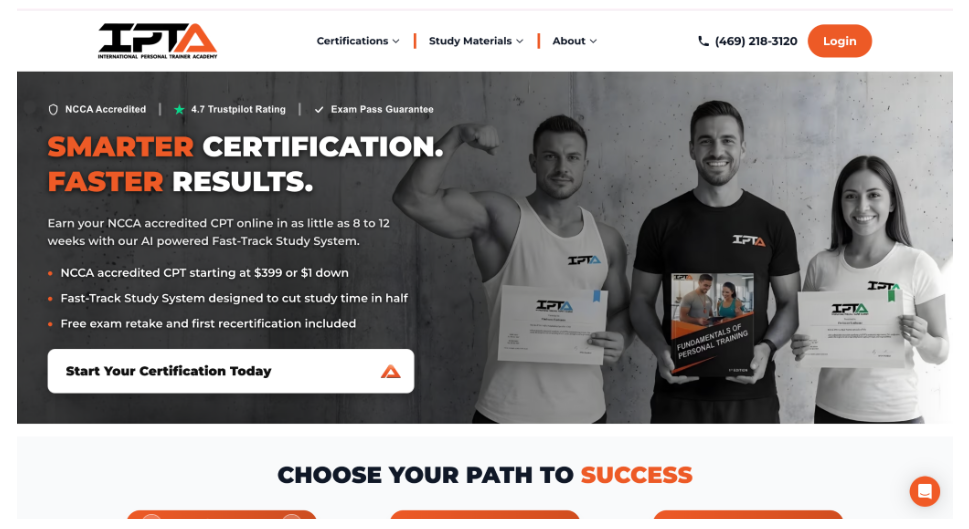
IPTA (International Personal Training Academy) is a fully online personal trainer certification with a $399 entry tier, NCCA accreditation, a 4.7-star Trustpilot rating, a mobile-first study platform, and a pass guarantee.
Overview
IPTA offers an NCCA-accredited CPT plus nutrition and bodybuilding-coaching credentials, all online, with study materials aligned to other major exams. Its honest tradeoff against the legacy names is brand recognition, since it’s the newest credential here. Accreditation is the equalizer: it puts IPTA on equal footing for what matters most to a new trainer, eligibility at gyms that require an accredited cert.
What makes it trustworthy
For an article about trust, IPTA’s strongest signals are concrete and verifiable: NCCA accreditation, a 4.7-star rating on Trustpilot across its student base, and transparent pricing. The platform’s pass guarantee (a refund if you complete the program and don’t pass) reflects confidence in the preparation. The SurePass AI study coach and self-paced mobile-first format round out a modern study experience. Most candidates finish in roughly 4 to 6 weeks.
Cost and retakes
The Rookie tier is $399 and includes the NCCA-accredited exam, study materials, and CPR/AED; the All-Star tier is $599 and the MVP tier is $799. IPTA backs enrollments with a pass guarantee, and the MVP tier adds unlimited retakes until you pass after course completion. IPTA advertises 0%-interest financing from $1 down, and a free trial lets you preview the platform first.
Accreditation
NCCA-accredited.
Support
The MVP tier also includes a job placement guarantee for eligible graduates (eligibility and conditions apply; confirm the current terms), the first recertification, and business courses through a TrainerStack partnership. On Trustpilot, reviews center on the quality of the study materials and responsive support.
Pros
- Genuine 4.7-star Trustpilot rating and NCCA accreditation
- Transparent, all-in $399 entry; pass guarantee with refund
- Unlimited retakes on the MVP tier; 0%-interest financing
- Modern, self-paced mobile-first platform
Cons
- Newest credential here, with less brand recognition than NASM or ACE
- A job posting that names another cert takes priority
Best for
Candidates who want a verifiably well-reviewed, accredited credential at a low all-in price.
NASM (National Academy of Sports Medicine)
Overview
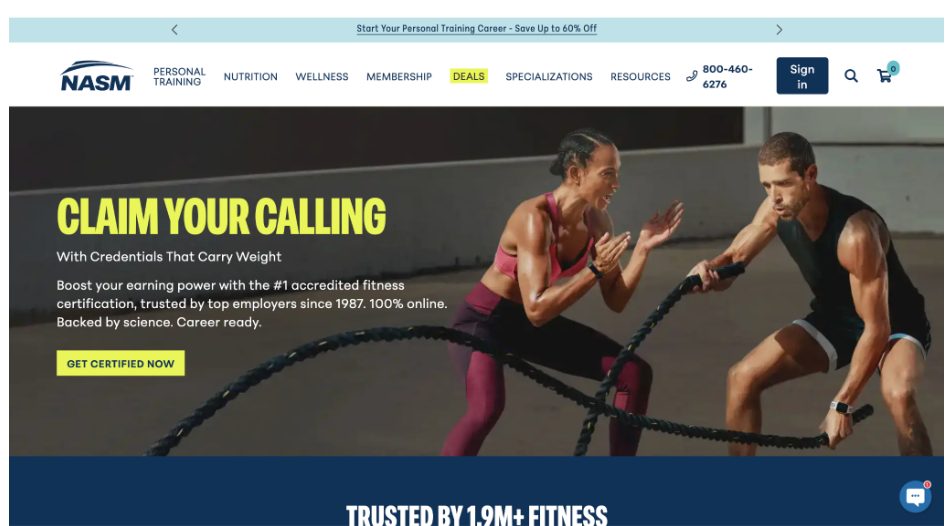
NASM, founded in 1987, is among the most widely recognized certifications, built around its Optimum Performance Training (OPT) model, with more than 1.9 million professionals trained across 100-plus countries by the company’s count, and partnerships with 14,000-plus gyms.
What makes it trustworthy
NASM’s trust comes from scale and track record: decades in the field, wide recognition at commercial gyms, and a deep specialization library for career growth beyond the entry-level CPT. You have up to 180 days from enrollment to sit the PSI-proctored exam, online or in person.
Cost
The self-study package is typically around $899, frequently discounted, with retakes included on some higher tiers and monthly payment plans available.
Accreditation
NCCA-accredited.
Pros
- Among the most recognized credentials at commercial gyms
- Long track record and deep specialization library
- Structured curriculum and planner
Cons
- Higher entry price than several alternatives
- Depth of material is a real study commitment
Best for
Candidates who want the broadest employer recognition and a well-established name.
ACE (American Council on Exercise)
Overview
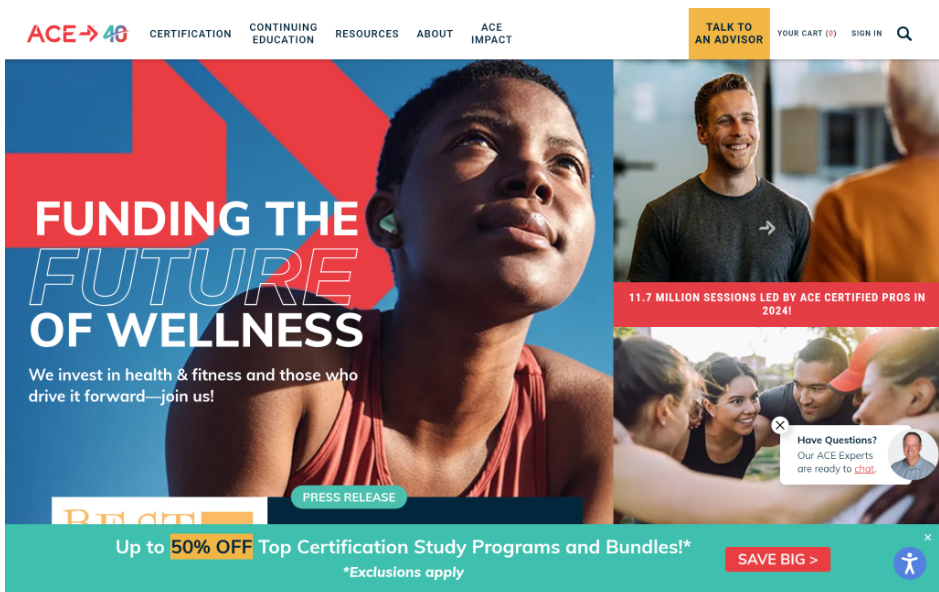
ACE has operated as a nonprofit since 1985 and is one of the most recognized certifications in the field, with four NCCA-accredited credentials (Personal Trainer, Group Fitness Instructor, Health Coach, Medical Exercise Specialist), specialist programs, and a large base of certified professionals across multiple continents.
What makes it trustworthy
ACE’s nonprofit status and 40-year track record give it durable credibility, and its tiered certification path lets a career grow within one trusted body. The NCCA-accredited exam is live-proctored, 150 questions over three hours.
Cost
ACE sells several study packages, with entry packages starting in the several-hundred-dollar range and the NCCA-accredited exam available as a $99 add-on. The first retake is discounted, with a waiting period. ACE offers interest-free payment plans.
Accreditation
NCCA-accredited.
Pros
- Established nonprofit with a long track record
- Tiered path that grows with your career
- Strong reputation, including in clinical-adjacent roles
Cons
- Higher total cost once packages and the exam add-on combine
- Retake involves a waiting period
Best for
Candidates who want a mission-driven, widely respected credential from an established nonprofit.
NSCA (National Strength and Conditioning Association)
Overview
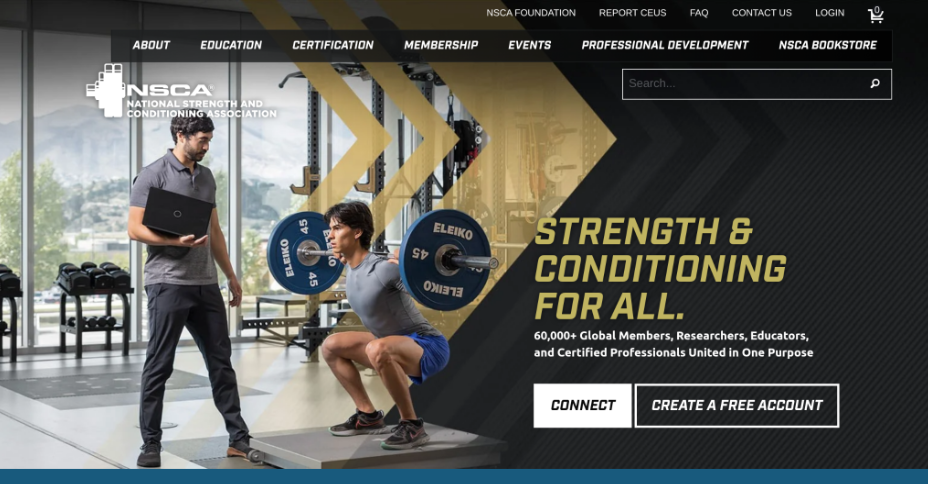
NSCA, founded in 1978, is a nonprofit and the recognized authority in strength and conditioning, publishing peer-reviewed research through the Journal of Strength and Conditioning Research and offering the NSCA-CPT alongside the well-known CSCS.
What makes it trustworthy
NSCA’s trust is research-based: its credentials, especially the CSCS, carry academic weight in athletic, collegiate, and performance settings where generalist certs aren’t considered. Continuing education resources (NSCA TV, a coaching podcast, special-interest groups) extend support beyond the exam.
Cost
The NSCA-CPT exam registration is $300 for members and $435 for non-members. This is the lowest single line item here, but it’s exam-only: study materials, including the required textbook (around $110), are sold separately, and the member rate requires a membership fee, so the realistic total is higher. Recertification is every three years.
Accreditation
NCCA-accredited.
Pros
- Research-based and highly respected in performance settings
- Strong continuing-education ecosystem
- Low exam-only fee for members
Cons
- Exam and materials priced separately, so the true total exceeds the headline fee
- More demanding, science-heavy orientation
Best for
Candidates targeting athletic performance, collegiate strength, or evidence-driven private training.
NCCPT (National Council for Certified Personal Trainers)
Overview
NCCPT, established in 1995, is a subsidiary of ISSA and offers an NCCA-accredited Certified Personal Trainer credential recognized at major health-club chains in the U.S. and Canada. Its study model emphasizes micro-video lessons and coaching from practicing trainers rather than automated tools.
What makes it trustworthy
NCCPT’s trust signals are its NCCA accreditation, recognition at major gym chains, and transparent pricing, plus human coaching support. The exam is administered by Prometric (online or at a testing center), and candidates have 12 months from purchase to sit it, with extensions available. NCCPT accepts GI Bill funding.
Cost
The NCCPT-CPT exam registration is $599, and study materials are sold separately, so budget for those on top. Recertification is every two years and requires continuing education plus a renewal fee (reported around $75).
Exam format
The NCCPT-CPT exam is closed-book, 140 items (125 scored), with a two-hour limit and immediate results.
Accreditation
NCCA-accredited.
Pros
- Accredited and recognized at major U.S. and Canadian gym chains
- Trainer-led coaching support; GI Bill accepted
- Transparent pricing with a long, extendable exam window
Cons
- Study materials not included with the exam fee, raising the real total
- Less brand recognition than NASM or ACE
Best for
Budget-conscious candidates who want an accredited credential with human coaching support.
How to pick your best match
Trust means different things depending on where you want to work. Match the credential to that.
Verify accreditation first. Confirm NCCA accreditation on the certifying body’s own page before anything else. It’s what determines whether a major gym accepts your credential on day one, and it’s the foundation of any “trusted” claim.
Weigh the kind of recognition you need. For commercial gyms, NASM and ACE carry the broadest name recognition. For athletic and performance settings, NSCA’s research-based credentials carry the most weight. For a verifiably well-reviewed, affordable accredited option, IPTA’s Trustpilot record and NCCA status are concrete signals.
Treat transparent pricing and terms as a trust signal. Clear, all-in pricing and stated retake and recertification terms are green flags. Watch for exam-only fees that exclude materials (NSCA, NCCPT), which raise the real total above the headline number.
Compare what’s included. Study tools, practice exams, specialty tracks, and support vary widely and affect both preparation and value. A higher price doesn’t automatically mean better preparation.
Confirm employer acceptance where you want to work. Every option here is NCCA-accredited, but if a specific gym names a certification in its hiring requirements, earn that one. Checking the hiring page takes a few minutes.
Frequently asked questions
What is the most trusted personal trainer certification? Trust depends on the setting. NASM and ACE have the broadest commercial-gym recognition; NSCA is the trusted standard in strength and conditioning; IPTA pairs NCCA accreditation with a genuine 4.7-star Trustpilot rating at $399. All five are NCCA-accredited, the baseline employers check.
Is IPTA NCCA accredited? Yes. IPTA’s Certified Personal Trainer credential is accredited by the National Commission for Certifying Agencies (NCCA), the same standard NASM, ACE, NSCA, and NCCPT meet.
What makes a certification trustworthy to employers? Primarily NCCA accreditation, which most major gyms require, plus track record and recognition. Accreditation is the objective marker; brand familiarity and independent reviews add to it.
Are newer certifications like IPTA trustworthy? A newer credential can still be trustworthy if it’s NCCA-accredited and well-reviewed, which IPTA is (4.7 stars on Trustpilot). The main tradeoff is brand familiarity: if a specific employer names an established cert, that requirement applies.
How can I verify a certification is accredited? Check the certifying body’s own page for an explicit NCCA accreditation statement, and cross-reference the NCCA’s listing. All five certifications here state NCCA accreditation.
Does a more expensive certification mean a more trusted one? Not necessarily. Price reflects packaging and brand recognition as much as credibility. All the options here meet the same NCCA standard, so a higher price mainly buys broader name recognition, not a fundamentally more accepted credential.
References
- IPTA (International Personal Training Academy). “Personal Trainer Certification | NCCA Accredited.” traineracademy.org. https://traineracademy.org/. Accessed 2026-06-10.
- IPTA. “Support and FAQ.” traineracademy.org. https://traineracademy.org/faq/. Accessed 2026-06-10.
- NASM. “Certified Personal Trainer Exam Info.” nasm.org. https://www.nasm.org/certified-personal-trainer-exam-info. Accessed 2026-06-10.
- ACE. “Personal Trainer Certification.” acefitness.org. https://www.acefitness.org/fitness-certifications/personal-trainer-certification/default.aspx. Accessed 2026-06-10.
- NSCA. “NSCA-CPT | NSCA-Certified Personal Trainer.” nsca.com. https://www.nsca.com/certification/nsca-cpt/. Accessed 2026-06-10.
- ISSA / NCCPT. “Accredited Certified Personal Trainer Exam.” issaonline.com. https://www.issaonline.com/certification/nccpt-exams/certified-personal-trainer-exam. Accessed 2026-06-10.
- NCCPT. “NCCA Accredited Exams.” nccpt.com. https://www.nccpt.com/. Accessed 2026-06-10.
 Evelyna Fenskerton has opinions about wellness and lifestyle insights. Informed ones, backed by real experience — but opinions nonetheless, and they doesn't try to disguise them as neutral observation. They thinks a lot of what gets written about Wellness and Lifestyle Insights, Expert Nutritional Guidance, Dietary Supplements Review is either too cautious to be useful or too confident to be credible, and they's work tends to sit deliberately in the space between those two failure modes.